_edited.jpg)

Nkabom Venture Quest Bootcamp 2026 Empowers Young Innovators to Transform Ghana’s Agrifood Future

The UGBS Innovation and Incubation Hub, leading the Entrepreneurship Pillar of the Nkabom Collaborative at UG, successfully organized the Nkabom Venture Quest Bootcamp 2026 from 10th to 15th May 2026 at the University of Ghana.
Formerly known as the Community Networking and Roadshow (CNR), the Nkabom Venture Quest Bootcamp continues to evolve as a transformative platform dedicated to empowering young people with entrepreneurial, leadership, and practical agrifood innovation skills. Implemented in collaboration with the Mastercard Foundation and McGill University, the five-day residential bootcamp brought together 186 participants from ten tertiary institutions across Ghana, including the University of Ghana (UG), University of Cape Coast (UCC), University of Professional Studies, Accra (UPSA), University for Development Studies (UDS), University of Education, Winneba (UEW), Accra Technical University (ATU), Takoradi Technical University (TTU), Ho Technical University (HTU), Koforidua Technical University (KTU), and Cape Coast Technical University (CCTU). The cohort represented a vibrant and diverse group of aspiring entrepreneurs and innovators, comprising 96 females and 90 males, including 15 persons with disabilities. Throughout the bootcamp, participants were immersed in a dynamic entrepreneurial ecosystem designed to expose them to real-world agrifood challenges, practical business development experiences, innovation-driven learning, and stakeholder engagement opportunities within Ghana’s agrifood landscape.

The bootcamp officially launched Cohort 2 of the Nkabom Venture Quest while also formally closing out Cohort 1, which successfully supported 51 enterprises through mentorship, venture development, and prototype creation. The launch event, held at the R.S. Amegashie Hall at the University of Ghana Business School, convened university leadership, funding partners, mentors, facilitators, entrepreneurs, industry experts, and participants to celebrate innovation, youth empowerment, and sustainable agrifood entrepreneurship. The opening ceremony began with a networking session, creating opportunities for participants and stakeholders to connect and engage. A vibrant cultural performance by the School of Performing Arts set the tone for the event by showcasing themes of agriculture, youth innovation, and community transformation. Participants were officially welcomed by Prof. Albert Ahenkan, who emphasized the critical role of entrepreneurship and innovation in shaping Ghana’s agrifood ecosystem and driving economic transformation.
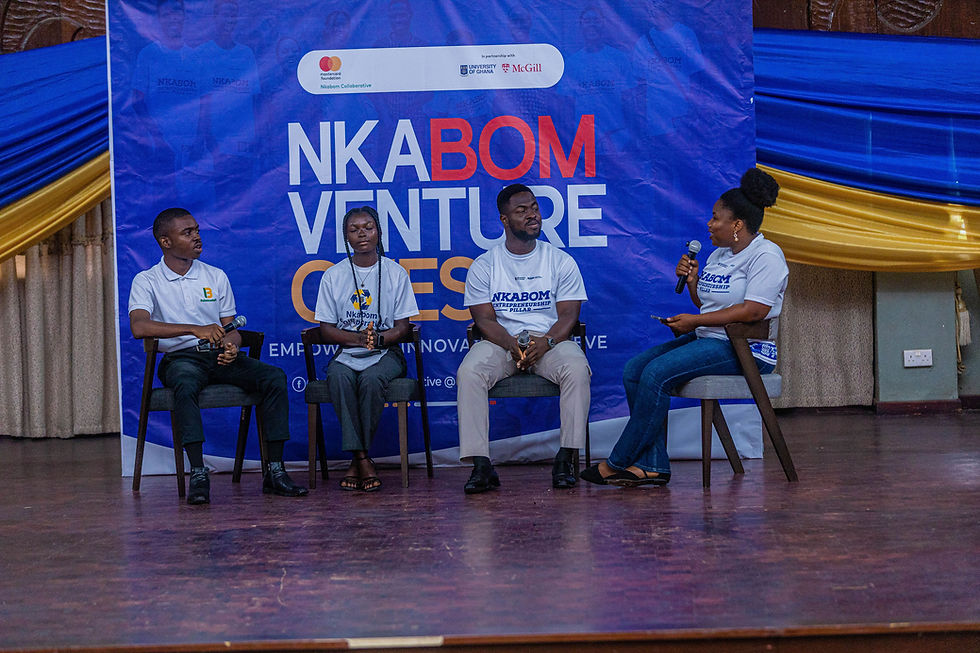
Opening remarks by Prof. Richmond Aryeetey inspired participants to view agrifood as the “new gold” and encouraged them to explore opportunities within the sector as pathways for job creation, innovation, and sustainable development. Participants were also introduced to the importance of intellectual property and innovation management during a presentation by Prof. Dodoo Arhin, who highlighted the need for young entrepreneurs to protect their ideas and leverage innovation for enterprise growth and sustainability. One of the most inspiring moments of the launch was the fireside chat session featuring entrepreneurs from Cohort 1. Through honest conversations and personal reflections, the entrepreneurs shared their journeys, challenges, lessons, and successes in building agrifood ventures. Their stories served as a powerful source of motivation for participants and reinforced the possibilities that exist within Ghana’s growing agrifood ecosystem.
The launch event also introduced the West African Youth in Agrifood and Nutrition Entrepreneurship (WAYANE) Network and its Interim Executives, positioning the initiative as a broader regional movement to build a strong ecosystem of young agrifood innovators and entrepreneurs across West Africa. Following the official launch activities, participants transitioned to onboarding and orientation sessions that prepared them mentally and socially for the upcoming intensive bootcamp experience. Psychosocial support, safeguarding sessions, and GoGive onboarding activities created an enabling environment that emphasized inclusion, well-being, teamwork, and collaboration.
The second day of the bootcamp focused heavily on entrepreneurship development, climate-smart innovation, and practical venture-building skills. Participants engaged in intensive sessions designed to strengthen their entrepreneurial mindset and deepen their understanding of sustainable agrifood systems. Discussions on climate-smart agrifood ventures emphasized the importance of building businesses that respond to emerging climate realities and market needs while prioritizing resilience, efficiency, and sustainability. Participants were introduced to community and industry profiling exercises in preparation for field immersion activities and roadshow engagements. Working collaboratively in teams, they began identifying practical agrifood challenges, stakeholder dynamics, and market opportunities within various communities and industries. A key highlight of the day was the co-creation and surge sessions, where participants worked directly with facilitators and industry experts across food and agriculture breakout rooms to refine their Business Model Canvas (BMC). Additional sessions on business ethics, business etiquette, and entrepreneurial discipline encouraged participants to appreciate professionalism, organizational conduct, and stakeholder engagement as critical pillars for sustainable enterprise development.

The third day of the bootcamp featured one of the most impactful experiences of the entire program, the Community and Industry Roadshow. Participants were divided into ten groups and assigned to various field locations, including agribusinesses, production sites, processing facilities, hospitality establishments, markets, and community enterprises across different segments of the agrifood value chain. The roadshow exposed participants directly to real operational systems, industry realities, and community-based enterprises. Visits to institutions and organizations such as LIPREC, Ghana Oil Palm Development Ltd, Tema Fishing Community, Humbeg Farms, Vegetable Centre of Excellence, Trolley Market, and Gemiel Company Limited provided participants with firsthand exposure to agrifood operations, stakeholder engagement, customer relations, food preservation systems, quality assurance processes, supply chain management, and business sustainability practices.
Throughout the field immersion, participants actively interacted with farmers, processors, distributors, suppliers, hospitality managers, entrepreneurs, and community stakeholders. They engaged in practical conversations around sourcing systems, value addition, market access, waste management, partnerships, business operations, pricing, reliability, and scalability. The roadshow also exposed participants to opportunities for collaboration, internships, product supply arrangements, and future enterprise partnerships. The practical field engagements significantly deepened participants’ understanding of the agrifood ecosystem while reinforcing the importance of professionalism, consistency, quality assurance, customer satisfaction, operational efficiency, and sustainable sourcing practices.

Day four focused on reflection, innovation, storytelling, and venture refinement. Participants critically reflected on lessons and insights gathered during the roadshow through SWOT analysis sessions, where they assessed the strengths, weaknesses, opportunities, and threats associated with their emerging business ideas. Intensive design thinking sessions challenged participants to develop human-centered solutions to agrifood challenges while refining customer understanding and testing assumptions about their ventures. Additional sessions on business effectuation introduced participants to entrepreneurial decision-making under uncertainty, equipping them with practical approaches for navigating challenges and adapting to changing business environments. Storytelling and pitching sessions further strengthened participants’ communication, branding, and presentation skills. These sessions empowered participants to communicate their business ideas more effectively, build confidence, and develop compelling venture narratives capable of attracting stakeholders, investors, and customers.
The day concluded with the “Rep Your School & Afrobeats” networking event, which created an exciting atmosphere for social interaction, cultural exchange, collaboration, and relationship-building among participants from the various institutions. Beyond the classroom and field experiences, the networking event strengthened friendships, peer learning, and a sense of community among the young innovators.
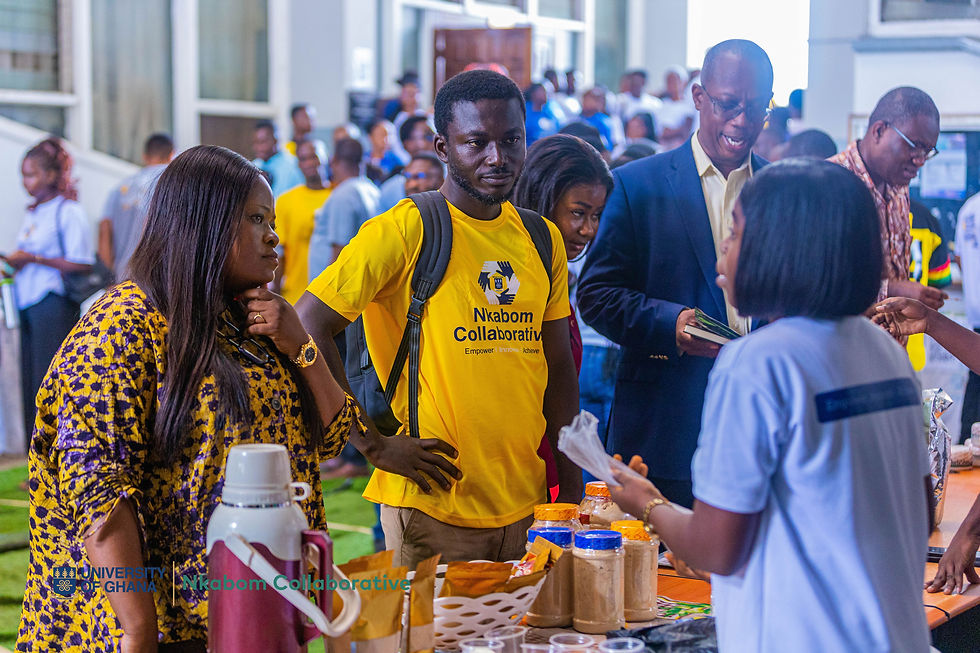
The final day of the bootcamp marked the conclusion of an impactful and transformative journey. Participants began the morning with a health walk and guided tour of the University of Ghana campus, particularly for participants visiting from other institutions. The experience allowed participants to familiarize themselves with the university environment while reflecting on their learning journey and connecting further with colleagues and mentors.
The Nkabom Venture Quest Bootcamp 2026 successfully combined classroom learning, mentorship, experiential engagement, practical exposure, and stakeholder interaction to create an immersive entrepreneurial learning experience for participants. Throughout the five days, participants remained highly engaged in training sessions, networking activities, discussions, co-creation sessions, and field engagements, demonstrating strong enthusiasm for agrifood entrepreneurship and innovation. By bridging the gap between theoretical learning and practical application, the Nkabom Venture Quest Bootcamp seeks to nurture a new generation of young entrepreneurs equipped to develop impactful solutions that contribute meaningfully to food systems transformation, job creation, and national development.


Comments